Mostrando entradas con la etiqueta La Paz. Mostrar todas las entradas

jueves, 5 de mayo de 2016

Peggy in La Paz!

Six months ago today I remember my first, very memorable view of La Paz. Dozing in the back of a taxi after a long flight I was suddenly and unexpectedly aware of a sprawling and colourful city. Thousands and thousands of multi-coloured houses, precariously stacked on top of each other, watched over by the majestic snow-capped Illimani, winking in the morning sun. It was a wonderful start to a wonderful adventure. I was taken to San Pedro, a bustling neighbourhood where there is never a dull moment and my home for the next 6 months.

I’ve loved living in and exploring this incredible and diverse country. Living at 12, 000 feet makes everyday spectacular and allows for some truly breathtaking (in more sense than one) adventures. Tucked in amongst the monstrous Cordilleras range there is unlimited trekking and exploring to enjoy.  Head 569km south and you can find the other-worldly splendour of Salar de Uyuni with its moon-scapes, pink flamingos, volcanic plains, and dark night skies crammed with stars. To the west there is steamy jungle teeming with birds and wildlife. My highlights have been camping trips in the mountains, whizzing down the dramatic and infamous death road, and exploring the beautiful Toro Toro National Park

Working at Instituto Exclusivo has been a real pleasure. There is a lovely team of teachers here and I felt very welcomed from my very first day. Our classes are usually one on one or small groups which means you end up getting to know your students really well. We teach in class, on Skype, and at people’s homes or work. This makes for a diverse group of students making everyday unique. From Bolivian businesswomen, to Spanish UN ambassadors, to plastic surgeons in Italy, to Bolivian teenagers, I’ve definitely had an eclectic bunch of people. It’s been really fun teaching them and they’ve taught me some things too.

If you’re thinking of coming to teach and live in La Paz I would highly recommend packing your sunscreen (particularly if you’re a fellow scot) and heading out here. It’s an interesting, diverse and lively place and I feel very privileged to have lived and worked here. 
Good luck and happy travels!

jueves, 21 de enero de 2016

Kateri's Top 4 La Paz Experiences!


So you’ve arrived in La Paz and are wondering what to do with your time.  There is no easy answer to this question, La Paz is an incredible tourist destination and at times can be extremely overwhelming with its plethora of activities and guiding companies welcoming you at every turn.  Sometimes even searching online won’t give you the upfront honest answers you are looking for.  If this is the case for you, I am here to help.  I have had the opportunity to live in this city for the past 6 months and pretty much every weekend has been a different adventure of sorts.  I’m here to tell you about my top 4 experiences so far, both on and off the tourist map.  All of these are within a 45 minute mini bus/taxi ride of the city and are extremely low budget.  If you find yourself in La Paz for only a few days and want to make the most of them, I highly recommend any of the following:  


#1: Paragliding with AndesXtremo
AndesXtremo is a small local company that specializes in extreme sports.  They do everything from paragliding, to trekking to rock climbing.  The guides are incredibly safe, professional and helpful.  I chose to partake in a once in a lifetime opportunity to fly over the Andean mountains on the outskirts of La Paz.  The cost is 450 Bs, which is on the lower end of the usual guided tour prices.  A paragliding trip with AndesXtremo will begin in La Paz, followed by a beautiful drive through the south and then up a steep road that will bring you to the right altitude for takeoff.  The launch point offers you stunning views of Illimani and the surrounding mountains.  After a safety talk and gear check, you will be ready to fly eye to eye with the birds.  These are the best guides in Bolivia and I had the time of my life.  After a thrilling thin air, Andean style paragliding experience they will take you for some popular local food and drink in Mallassa.  Overall a 10/10 experience and I would recommend it to anyone who has an extra day to spare and the taste for a little La Paz Xtreme.  


#2: Hiking the Tuni Condoriri
Tuni Condoriri is a wonderful, high altitude hike achievable in one day if you are short on time, or two days if you would rather take your time and camp among the mountains and glacial lakes at base camp.  This “short” trek takes you through the spectacular, glaciated Andes, and is possible for anyone in good physical condition and well acclimated to the altitude.  No special equipment is required, just good hiking boots, warm, layered clothing, sun, wind and rain protection. The trek starts at an altitude of 4500m and rises slowly to the turquoise Chiar Khota Lake, at the base of massive glaciated peaks.  The summit is at a stunning 5400m viewpoint with views of the Cordillera and Lake Titicaca.  You could use a guiding company for this trek if you like, but it is also possible to organize your own transport to the base of the hike at Janchillani, and (as long as you are well prepared) do the trek on your own!  Transportation takes about 2 hours and will take you through El Alto, the Bolivian Antiplano , and the Cordillera Real.  I did this trek in two days with a group of 6 friends.  We had a fantastic time both hiking and camping.  It is a solid hike with stunning views without too much technicality and preparation necessary.  Definitely a must-do! 


#3:  Rocking Climbing and Hiking La Muela del Diablo
La Muela del Diablo is an iconic feature of the La Paz landscape.  The name means “Devil’s Molar” and refers to the shape of this massive rock feature.  It is visible from all parts of the city -  always reminding you to go check it out! Many people know that it is possible to hike this, but not many people know that you can actually rock climb it as well! There are bolted sport routes hidden in plain sight all over the formation.  Unfortunately, not much is written online about the specific routes, but if you are an experienced climber, know your personal limits and have the right gear, it is well worth a try.  The only website I have found any beta about the type of climbs available is on https://www.mountainproject.com/v/west-tower/110875008. My brother and I did this without using a guide because we are experienced climbers and had brought all our gear with us.  It is possible, however, to find a Bolivian guiding company to “show you the ropes”.  Even if you can’t rock climb La Muela, I highly recommend the 4 hour day hike from La Muela to the town of Jupapina.  You can access La Muela cheaply using the mini bus system, or a taxi service.  A taxi would cost around 80 bolivianos, but if you take a mini bus it will only be 3bs! Take the mini bus to Los Pinos as far as it will go and then just hike up through the town and you will find your way to La Muela.  Definitely worth checking out and it is only about 30 minutes away from the city center!


#4: Colibri Camping night out with friends 
Finally, if you are feeling city cramped and needing a quick escape into nature and silence, I recommend a trip to Colibri Camping Eco Lodge.  This is a beautiful camping facility with tents, teepees, cabins, a fully equipped outdoor kitchen, hot showers, hammocks, firepits and more! The best part is that it is an easy minibus ride from La Paz to Jupapina, it´ll only cost you 3bs!  I would recommend combining a day hike from La Muela del Diablo with a night camping at Colibri for an extremely full day and night of outdoor fun.  The owners of the camping facility would be more than happy to organize transport and tell you everything you need to know to make this adventure a success. It is amazing how wonderful it feels to find silence and stars no more than 40 minutes away from the hustle bustle of La Paz city center. If you are looking for a break from it all, this is the place to go! 

These are only a handful of the wonderful activities La Paz has to offer.  I hope this has inspired you to find yourself on an epic adventure, even if you only have a day or two and under 100 dollars to spare.  Good Luck and Happy Trails!

- Kateri Raglow 

jueves, 1 de octubre de 2015

A welcome from our new director


This month I’d like to introduce myself as a new member of the i.e. team. As I enter my third month as Executive Director, I feel lucky to lead this dynamic institute powered by qualified, experienced and well-trained teachers and further bolstered by a handful of friendly, resourceful and gifted administrators.  At the moment, we have Spanish teachers, English teachers, Aymara teachers, Quechua teachers and Dutch teachers on staff. This talented group impacts students way beyond La Paz thanks to our online classes.


I arrived in La Paz last December and immediately heard of the Institute as the place to go to learn Spanish. I signed up, sat on the comfortable couch and looked around.  Students from around the world were learning to communicate in new ways. I saw a group of 18 year old Germans on their first  experience abroad. I chatted with a 60 year American volunteer still dusty from an afternoon of work. Also, through closed doors, I heard Bolivians learning English. By February, I was a full-time student and by June 1, my portenhol (a blend of Portuguese and Spanish because I started as a Portuguese speaker) had almost completely converted to Spanish. On my study breaks, I explored our neighborhood of Sopocachi with its lovely park, many coffee shops, tasty food options and plenty of hills where I could get a little exercise. 


The opportunity to lead the Institute unfolded through conversations between my Spanish classes. My work experience as a Director of Study Abroad combined with my years as an international development professional complements the exciting and burgeoning opportunities the Institute will face in the near future. 

As Director, I continue to be amazed at the diversity of students who pass through our doors and sit in our classrooms. We’ve had groups of international volunteers from Japan and Korea, study abroad students from Norway and travelers from Holland hoping to gain experience and skills during their gap year. 

During this time many individual students have studied with us as well. Although it’s difficult to describe a typical i.e. student, they do have some qualities in common. The students I’ve chatted with are bold and adventurous - they’re willing to wade deep into the waters beyond their comfort zone. There’s also a palpable respect for culture and a desire to tap into it through language. As an example, one of our long term students is researching (for her Phd) how indigenous women understand their legal rights as women and as members of an indigenous group. The project involves enormous amounts of listening. When she arrived here a year ago, she thought she’d bitten off more than she could chew as her Spanish was basic. After several months as a full time i.e. student, she developed the skills and confidence needed to conduct her research. “For me”, she said, “Learning Spanish at the Institute was essential for me to be able to build rapport and understand the perspectives of the women I interview.” 


Another student came to i.e. to learn survival Spanish as he biked across South America. However, once his classes started, he didn’t want to leave La Paz and yearned for a level of Spanish beyond the basic. Eventually, he did leave and biked for five months across Bolivia, Chile and Argentina. After only a couple months back home in Alaska, he decided to return to i.e. and explore more of La Paz. He told me, as we conversed in Spanish, “I think I’ll have to go back home in November but then again I really love La Paz - I may stay an extra couple of weeks.” 


I hope you too can join the i.e. family. If you don´t happen to find yourself in La Paz, how about learning with us online? I’m sure you’ll understand why our students choose ie . Or, if you fancy trying out life on the other side of the desk, why not train to be an English teacher with our accredited TEFL course or look into one of our internship opportunities.  In the meantime, check out our website and feel free to email us any questions you may have. 

I hope to see you soon and hear your story.

Saludos, 
Mansir Petrie

viernes, 26 de junio de 2015

Gran Poder


The festival of Gran Poder is the clearest representation of multiculturalism in Bolivia.At 7:00 a.m. on Saturday, May 30th, the first fraternity (folkloric group) enters and the government headquarters initiates the party, with 65 fraternities showing their faith, gratitude and culture along the way. One of the most important reasons for this celebration is to worship and show devotion to the Lord Jesus del Gran Poder. This festival is one of the ways in which we celebrate what it means to be Andean.

The streets are filled with people and vendors of all kinds selling food, beer as well as other traders seeking the ability to sell their products more freely. The audience is diverse, with large families moving hurriedly from one place to another in search of a space, carrying even the smallest children.  Overall, Gran Poder is a cathartic experience where the community comes together with nature, affirming its willingness to ensure the survival of the Andean heritage.

The start of the Gran Poder is a religious holiday which is expressed through dance and rhythms from different regions.  Each and every one of the dances represents a region of the country, and all of these carry a story behind them. There are countless colors, masks, costumes, and decorations which can be seen in the moves of the fraternities, not to mention the spectacle of the bands. The vibrant sound of their instruments makes the people and the dancers feel the vibrant notes of Bolivian folkloric music.

The origin of the Fiesta del Gran Poder dates far back to December 8, 1663 when they founded the Convent of the Conception Mothers.  Since its creation this celebration has undergone some changes and incorporated new dances and fraternities.  In the 30s and 40s there was an integration of native bands from Los Yungas, with drumbeats which worshipped the image of the Lord Jesus del Gran Poder. Having become a departmental event in 1952, there were departmental Paceña dance festivals at the stadium, where the idea of a more organised event was realised, drawing together the various cultural ideas.  The new version of Gran Poder 2015 seeks to achieve the title of Intangible Heritage from UNESCO. 


lunes, 15 de diciembre de 2014

Language and Identity

This week´s entry is guest post written by one of our Spanish students, Ashley.  She is here in La Paz to do research for her phd and is keeping an insightful and interesting blog detailing her experience of doing fieldwork abroad while negotiating a new life in a new city .
Check out her blog here: http://llamalass.com/

Language and Identity: Who is that voice?

Language and identity have been at the forefront of my mind not only since I arrived here in Bolivia, but since I started learning another language. I am speaking Spanish when I am at home and a mixture of English and Spanish when I am out. Negotiating my way between the languages and attempting to express myself in a way that feels like me, like who I am at home, is extremely complicated. My engagement with language and identity is very brief here, however it is something I will be exploring in greater detail throughout the course of my research. For now, it is a brief personal reflection.

Identity

My interest in identity in general has always meant that I frequently take a step back in order to consider my own identity and how it may be changing. I am currently reading Connecting Self to Society by Vanessa May, a book recommended to me by my good friend Jenny. Thanks Jenny! This book explores the idea of belonging, from the different possible definitions that exist and the to how people place themselves in society, with their surroundings, family, friends, strangers. It is an interesting read, for academics and non-academics alike.

Moving away from home and everything that is familiar is difficult for anyone, and it is inevitable that being removed from the familiar and situated in an unfamiliar world can affect your notion of belonging, and of who you are and what you do. Whilst this sounds negative, and in many ways when I feel homesick it certainly is, it also provides the space to re-evaluate yourself, your identity, your likes and dislikes, the things that you are comfortable with and the things you might not be so comfortable with. The first thing I felt uncomfortable with was language, and I soon realized that living in a language which is not my native one, was having an affect on me, my personality, how people relate to me, and in turn, my identity.

Speaking Spanish

Speaking another language has felt strange. I realized earlier on today whilst talking to my husband on Skype, that that was the first I had spoken English today. I had my breakfast this morning and my host sat down to ask all about my day yesterday (as I didn’t get back in until after 1am), and our conversations are always in Spanish. Eli and Pepe, my hosts, do not speak any English at all.

Whilst I am able to express myself and people understand me, there are subtle things missing that I feel make me who I am. These might be things that you say that are funny or silly, that add some character to your expressions and descriptions. Those things in English do not often translate well to Spanish and instead I find myself feeling a little frustrated that I can’t be funny, or make someone laugh (intentionally). The ability to do so may come with time, but it certainly affects the way that you think people might perceive you, which is central to your identity.

I have also found it difficult to switch between English and Spanish. I have made friends with people from Germany, Norway and Belgium, and when I am with them, we switch between English and Spanish. Getting used to switching between the two will take some time. I have also found that speaking Spanish has affected the way that I speak English. Instead of saying I am going to my friend’s house, I have said “I am going to the house of my friend” (in Spanish “voy ala casa de mi amiga”). My English feels simplified at times and I realise how strange I sometimes sound.

When I listen to myself speak Spanish, it feels strange, as if I am listening to another person. The tone and pitch of my voice is different and my expressions are likely to be different too. It doesn’t sound like me. Who is that person?

Language and Identity

Identity must be considered alongside language in relation to language use, choice and preference. Whilst I talk about identity here, I do not consider there to be just one identity. Identity is, of course, ‘constructed’. We often have multiple identities, and they are reshaped and restructured throughout our entire lives. Identities are continuously being negotiated and re-negotiated. As I negotiate my way through the Spanish language, stepping every now and then back in to English, I can feel a change in my identity, or at least the one I am most conscious of.

It can be suggested that our realities are reflected in our language and so I often wonder what reality is being reflected when I speak in a language that is not as familiar to me, and one in which I cannot always successfully express myself. There is no real answer here, but it is something that I have considered deeply at various points over the last two days, questioning who this voice is that is coming from me, but not able to say exactly what I want it to. I feel like a child, frustrated and anxious; trying to understand and be understood.

The value of speaking another language

Negotiating identities does not need to be negative, and in fact I have come to really appreciate that I am able to speak a language other than English. There are people I have spoken with that I would never have had the ability to before. Not knowing another language means that there are a ton of people out there in the world that you can’t communicate with; a massive myriad of personalities that you’ll never get to know; a wide range of life experiences that you’d never get to understand. Learning a language is not easy, and speaking that language more than your native one is also not easy, but I appreciate the time and effort I invested (and continue to invest) in learning Spanish.

Before I left Scotland, people told me I would change and that I would come back a different person. I’m not sure that is strictly true. I have always been reflective about my surroundings, my feelings of belonging and the influences on my identity, but I do know that I appreciate language more than I ever have.

viernes, 21 de noviembre de 2014

Ñatitas

 Last weekend one of our Spanish teachers, Carlos was kind enough to take a group of students and staff to the Ñatitas celebration at Cementerio General. Although I had previously visited Ñatitas, it was great to have the opportunity to go with someone more knowledgeable about this uniquely Bolivian celebration. This is really a “you have to see it to believe” kind of thing. Arriving at the cemetery, one is confronted by an array of skulls adorned with hats, sunglasses, smoking cigarettes and garlands of flowers. Around the skulls, families gather, chatting and drinking coke while musical groups play traditional songs nearby. The atmosphere is incredibly festive and happy, providing a strange contrast to the backdrop of mausoleums and graves. 

Below, Carlos will give you the low-down on the roots of this incredible Bolivian tradition.


Carlos:
This party is basically about sharing bread, candles, coca leaves and even cigarettes with the soul of the person remaining in the skull. In return we receive protection and good luck. The skulls are commonly found in small businesses in the city or country, especially near the door. They like privacy which is why it is normally a little difficult to see them, unlike during the ceremony of Ñatitas where the skulls are publicly displayed in the cemetery.

There are many theories about the origins of the Ñatitas. Some believe this tradition comes from the Aymara culture. The Yatiris used these skulls as lucky charms, not just for protection, but also to predict the future. Ñatitas were also used to ward off black magic. People in those days were so afraid of black magic that they would have a skull for the protection of themselves and future generations. The Ñatitas made up part of their will and would be inherited by the children after the parents died.

Another theory about this tradition comes from the Chaco war. According to some researchers, a single old lady, whose only son disappeared in action during the war, went looking for him when the war ended. The lady had dreamed about him dying on the battlefield and desperately went to the "Chaco" where found only a skull and took it as if it were from her dead son. She cared for the skull by lighting candles, talking to it and sharing coca leaves with it. She said her son was home and he was taking care of her house and businesses - which improved incredibly. The neighbour who saw this believed they could receive the same good luck and protection from the skulls as this lady did.

No matter the origin of this tradition, people enjoy sharing a day dancing and singing with the Ñatitas. Even though this is maybe not seen as an important celebration, like All Saints Day for example, it is important for the believers like me :)

jueves, 13 de noviembre de 2014

To Instituto Exclusivo and beyond...


Check out the new Instituto Exclusivo video made by Rebecca, one of our English teachers.  It gives a little taste of La Paz and life here at Instituto Exclusivo.  If you're toying with the idea of travelling abroad...do it!  You won't regret it!  Latin America is so wonderfully diverse, with incredible people, places and cultures and by learning some Spanish, you will get so much more out of your travels.  Here at Instituto Exclusivo we provide our students with a safe, friendly place to learn Spanish that won't break the bank - pretty high concerns on any backpackers list (I say this from experience)!

So.....why come to Bolivia?

Por que no?! - You have nothing to lose!  Fear of the unknown puts so many people off travelling but it really is life-changing in the best possible way.  

The diversity - This country has so much to offer - from the jungle to the moutains and everything in between.  Think high plains, deserts, salt flats and hot hot heat. And Lago Tititcaca is pretty much as big as an ocean so we even have that ;)

The adrenaline rush -  and I'm not talking about the rush when you find out your long distance bus has a working toilet.  Tourism in Bolivia has grown rapidly over the last few years and extreme sports are really starting to take off.  A couple of La Paz companies who spring to mind for that sort of thing are Gravity Assisted Mountain Biking who provide crazy mountain biking trips in breathtaking locations and Urban Rush, if abseiling down a 17 story building dressed as spiderman is your thing.  From paragliding to swimming with pink dolphins there is something for everyone on this adrenaline spectrum. 

You get bang for your buck.  Hate saying it, but as a developing economy, prices are still very low here in Bolivia.  If you're coming in with dollars, pounds, euros etc your money goes will go an incredibly long way.  You can load up with as many llamas sweaters as you can fit in your backpack while still having enough left over to spend 4 days in a jeep touring the Salar de Uyuni before hot footing it to the jungle and going piranha fishing in Rurrenabaque. 

Last, but by no means least, Bolivian Spanish is easy to understand!  Might sound like a small thing but trust me, once you've heard two Chileans deep in conversation you'll realise how much easier it can be here.  
So what are you waiting for.....?

If this little list has whet your appetite then check out these links for more  information on Bolivia  - Bolivia Bella and Bolivia-online 

lunes, 20 de diciembre de 2010

FESTIVAL OF TODOS SANTOS


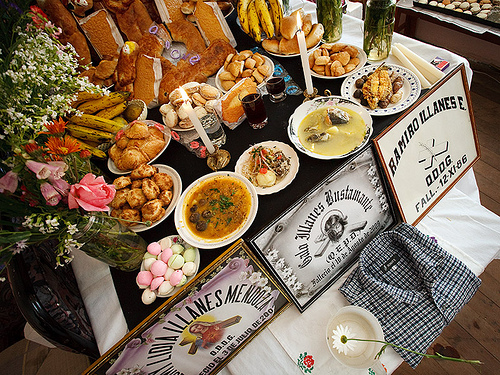
The celebration of “Todos Santos” is a Catholic event for us to remember the dead. According to the Aymaran culutre, souls travel to the west and return during this festival to their place of origin.  During this celebration, the bereaved family gather around a special table to honor the deceased. This table is specially prepared for the occasion with fruits, breads, beverages and food that the deceased liked when they were alive.

The ingredients for a “Todos Santos” ceremony are:


The Tantawawa: This is a type of bread in the shape of a person. It is made with flour, water and butter. The Tantawawa bread represents the deceased.


The staircase: This is also a type of bread. According topopular Bolivian wisdom, it helps souls cross obstacles such as hills, rocks and high walls.

The Horses: Another type of bread, this time in the form of a horse. The horses are supposed to help souls carry their breads and others gifts when returning to heaven.


Chicha Morada: It is said that this drink quenches the thirst of the deceased. It is made of purple corn, sugar and lemon. Beer, soft drinks and other types of beverage can also be offered to the deceased.


Sugar cane: It symbolizes the shadow that requires a soul on sunny days.

Food: Consists of both traditional dishes and the deceased´s favourite dishes.

Candles: These illuminate the path of the souls.

Fruit: The fruit is selected depending on the favourites of the deceased.

Flowers: They are used to decorate the table and are also mainly chosen according to the taste and age of the deceased.

When clearing the table, the fruits, breads and drinks are given to people who say a prayer honoring the deceased.

By Alejandra León